Choosing the right pressure control valve is rarely a simple catalog decision. Global buyers must compare pressure range, flow capacity, materials, connection standards, control accuracy, and maintenance access. A valve that performs well in a clean water system may struggle with steam, corrosive chemicals, or fluctuating gas pressure. Real operating conditions matter.
This guide examines seven leading pressure control valve options for international applications. Each selection is considered through practical criteria, including documented performance, manufacturing quality, installation flexibility, spare-part availability, and technical support. Field experience shows that reliable pressure regulation often depends on correct sizing rather than brand reputation alone. Small errors can create noise, vibration, leakage, or unstable downstream pressure. That is expensive.
The comparison also considers certifications, environmental conditions, temperature limits, and compatibility with regional piping systems. Buyers should verify current specifications with manufacturers before placing an order. Product data can change, and local approval requirements differ. No ranking can remove every uncertainty. That limitation deserves attention.
Some valves may offer excellent precision but require skilled commissioning. Others may be easier to service but less suitable for severe pressure changes. The strongest choice depends on the application, budget, delivery expectations, and available maintenance expertise. Clear technical documents, responsive engineers, and traceable quality records can reduce purchasing risk. Seven practical contenders follow.
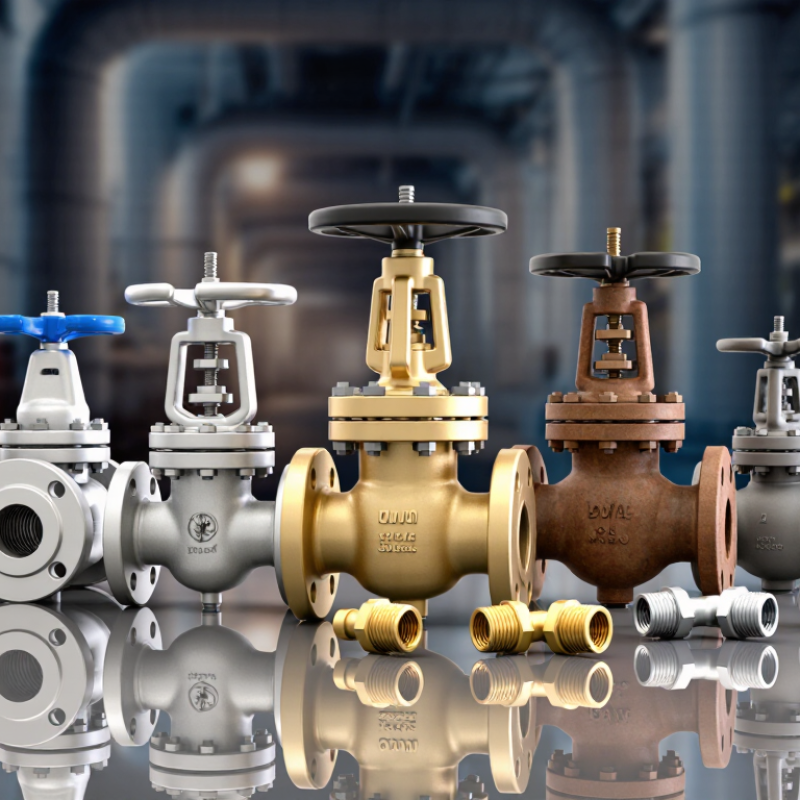
Pressure control valves regulate fluid pressure by changing the flow area inside a pipeline. A sensing element measures downstream or upstream pressure. A spring, diaphragm, piston, or actuator then moves the valve plug. This movement restores the selected pressure range. The process resembles a faucet, but it responds automatically and continuously.
The IEC 60534 control-valve standards describe essential sizing and performance principles for industrial service. MarketsandMarkets reported that the global control valve market was valued at about USD 7.7 billion in 2023. It also forecasts continued growth through 2028, driven by process automation and energy projects. These figures cover control valves broadly, not pressure-control units alone. That distinction matters. Buyers can misread market data when comparing suppliers.
Tips: Check media type, temperature, pressure range, flow coefficient, and failure position. Ask for tested noise and leakage data. For gas service, verify regulator capacity at minimum and maximum inlet pressure. For liquid service, examine cavitation risk and pressure drop. Field experience shows that an oversized valve often hunts instead of controlling smoothly. A smaller body may improve resolution, but it can restrict peak flow. Selection is rarely perfect on the first calculation. Recheck operating data after installation. A clean impulse line, correct orientation, and periodic inspection can matter as much as the valve itself. Geological conditions, pulsating pumps, and changing demand may expose weaknesses that laboratory figures do not show.
Pressure control valves regulate downstream pressure by sensing pressure changes and adjusting the valve opening to increase or restrict flow. The chart shows seven commonly used EN nominal pressure classes, expressed in bar. PN is a nominal designation at a reference temperature, not a guaranteed operating pressure; the allowable pressure depends on the valve material, temperature, fluid, flange standard, and applicable safety requirements.
Pressure control valves suit different applications because pressure behaves differently in each system. Spring-loaded relief valves protect boilers, compressed-air lines, and storage vessels from sudden overpressure. Pilot-operated relief valves provide tighter control in large pipelines with stable flow. Pressure-reducing valves lower high inlet pressure for clean-water networks, process skids, and pneumatic equipment. Backpressure valves maintain upstream pressure in pumps, reactors, and dosing lines. They need careful sensing connections.
Differential pressure valves control the pressure gap across filters, heat exchangers, and circulation loops. Vacuum relief valves prevent tank collapse during draining or cooling. Proportional pressure valves support precise regulation in hydraulic machinery and automated test equipment. Selection depends on media, temperature, flow range, response speed, connection size, and failure position. A valve that performs well with water may react poorly with steam or corrosive fluids.
Tips: Check the real operating range, not only the design maximum. Ask for material certificates, pressure-test records, and calibration data. Confirm local installation rules before purchase. Leave room for maintenance. Small details matter.
Field experience shows that unstable pumps often make a good valve appear defective. I have also seen oversized valves hunt between open and closed positions. That mistake wastes energy and increases wear. Specify minimum and maximum flow, expected pressure fluctuations, and cleaning conditions. For international projects, verify thread or flange standards, documentation language, spare-part access, and inspection requirements. Reliable control begins with accurate operating data, although site measurements are sometimes incomplete.
| Valve Type | Primary Control Function | Typical Pressure Capability | Typical Accuracy | Best-Fit Applications | Main Advantages | Important Limitations |
|---|---|---|---|---|---|---|
| Direct-Acting Pressure-Reducing Valve | Reduces a higher upstream pressure to a lower, preset downstream pressure. | Commonly used from low pressure up to approximately 40 bar (580 psi), depending on the design, size, and materials. | Typically about ±5% to ±10% of the set pressure under stable operating conditions. | Water distribution, compressed air, irrigation, small steam systems, gas services, and general-purpose process lines. | Simple construction, fast response, low maintenance, and no external power or sensing line required. | Downstream pressure can change with flow variation; less suitable where very tight regulation is required. |
| Pilot-Operated Pressure-Reducing Valve | Uses a pilot circuit to regulate and reduce downstream pressure. | Frequently applied in medium- and high-pressure systems, commonly up to approximately 100 bar (1,450 psi), with special designs available beyond this range. | Often about ±1% to ±3% of the set pressure when correctly sized and commissioned. | Municipal water networks, large process pipelines, steam distribution, industrial gas systems, and high-flow installations. | Better pressure stability, high flow capacity, and lower pressure loss at high throughput than many direct-acting designs. | More complex installation; pilot passages may be affected by dirt, and a minimum pressure differential is usually required. |
| Back-Pressure Regulator | Maintains a selected upstream pressure by opening when upstream pressure rises above the set point. | Typical process models cover vacuum-to-low pressure services and pressures up to approximately 400 bar (5,800 psi), depending on construction. | Commonly about ±1% to ±5% of the set pressure, depending on the sensing element and operating conditions. | Pump discharge protection, gas blending, filtration systems, chemical dosing, fuel systems, and upstream pressure stabilization. | Provides automatic upstream pressure control and can protect pumps and process equipment from excessive pressure fluctuation. | It does not directly regulate downstream pressure; incorrect sizing can cause unstable operation or excessive pressure drop. |
| Differential-Pressure Control Valve | Maintains a defined pressure difference between two points in a system. | Common differential settings range from approximately 0.05 to 10 bar (0.7 to 145 psi), depending on the application and valve design. | Often within approximately ±5% of the differential-pressure set point. | Hydronic heating and cooling, HVAC systems, district energy networks, heat exchangers, and flow-balancing applications. | Helps stabilize system flow, reduces control-valve noise, and protects equipment from excessive differential pressure. | Requires correct connection to both sensing points; performance depends strongly on system dynamics and installation conditions. |
| Vacuum-Regulating Valve | Controls or limits vacuum by admitting air or gas, or by regulating the vacuum level in a process. | Commonly used from atmospheric pressure down to approximately 1 mbar absolute (0.015 psi absolute); deeper vacuum requires specialized equipment. | Typically about ±2% to ±10% of the specified vacuum range, depending on the sensing technology. | Vacuum packaging, vacuum ovens, laboratory equipment, evaporators, suction systems, and vacuum process vessels. | Prevents excessive vacuum, supports stable process conditions, and is available in mechanical and electronically controlled formats. | Leakage, moisture, contamination, and outgassing can affect performance; valve materials must be compatible with the vacuum service. |
| Safety Relief Valve | Opens automatically at a defined set pressure to protect equipment from overpressure, then reseats after pressure decreases. | Commonly available from low-pressure systems to several hundred bar; the allowable range is governed by the certified design and application code. | Set-pressure tolerance is commonly within approximately ±3%, with exact requirements determined by the applicable standard and certification. | Boilers, pressure vessels, pipelines, compressors, pumps, storage tanks, and chemical or petrochemical process equipment. | Independent overpressure protection, rapid response, and suitability for critical safety applications. | It is a protective device rather than a continuous regulating valve; discharge piping, inspection, and certification are essential. |
| Electronic Proportional Pressure-Control Valve | Modulates valve opening in response to an electrical command or pressure-feedback signal. | Commonly used from vacuum or low pressure up to approximately 100 bar (1,450 psi); specialized versions may support higher pressure. | Often about ±0.5% to ±2% of full scale when paired with an appropriate sensor and control system. | Automated test benches, semiconductor equipment, robotics, medical devices, precision gas control, and digitally controlled process skids. | High controllability, remote adjustment, fast automation integration, and compatibility with closed-loop pressure control. | Requires electrical power, instrumentation, software or a controller, and careful attention to electromagnetic compatibility and sensor calibration. |
Evaluating the seven best pressure control valves requires more than comparing catalog pressure ranges. Start with the process itself: fluid type, temperature, flow variation, inlet pressure, and required outlet stability. A valve that performs well on clean water may respond poorly to gas, steam, or abrasive liquids. Field experience shows that real operating conditions often differ from laboratory figures.
Compare each valve by control accuracy, turndown ratio, response speed, and maintenance access. Direct-acting designs suit simpler systems with moderate flow changes, while pilot-operated models can manage larger fluctuations more precisely. Electronic valves offer detailed monitoring, but they need reliable power, sensor calibration, and protected wiring.
Back-pressure and differential-pressure valves should be judged by their stability under changing downstream demand. Check seat materials, actuator strength, fail-safe behavior, and available spare parts. Small details matter.
Do not trust pressure ratings alone. Ask for test data at your actual flow range. Review noise, vibration, leakage limits, and cleaning requirements. Installation space can also eliminate an otherwise excellent choice. I have seen technically strong valves underperform because impulse lines were poorly routed or filters were ignored. That mistake is easy to repeat. A practical evaluation should include a trial period, recorded pressure readings, and maintenance feedback from the operators. Cost deserves attention, but a cheaper valve may demand more frequent adjustment and create unstable production.
Global buyers need more than a pressure control valve with an attractive price. They need stable performance across different systems, climates, and maintenance conditions. Accurate pressure regulation is essential, especially when flow rates change suddenly. Look for a wide adjustment range, low leakage, and materials suited to the process fluid. Stainless steel bodies can improve corrosion resistance, while reinforced seals may support longer service intervals. Do not ignore response speed. Slow control can create pressure spikes.
Tips: Check the valve’s pressure rating, connection standard, temperature range, and control signal before ordering. Confirm whether replacement seals and technical drawings are available locally. Ask for test records, calibration details, and traceable material information. A clear installation manual also matters. It can prevent expensive mistakes.
Global projects often involve unfamiliar piping layouts and different service teams. Therefore, compact dimensions, simple maintenance, and accessible spare parts can influence the real ownership cost. Noise control may matter near production areas. For remote sites, a valve with reliable manual override provides practical security. Digital monitoring is useful, but only when technicians can support it. More technology is not always better. In my experience, buyers sometimes focus on maximum pressure and overlook minimum controllable flow. That gap can cause unstable operation. Specifications should be checked against actual working conditions, not ideal laboratory figures. A small pilot test can reveal problems before large-scale installation.
7 Best Pressure Control Valves for Global Buyers?
How to Compare Suppliers, Standards, Prices, and After-Sales Support
Global buyers should compare pressure control valves by duty, not appearance. A valve for steam needs different trim, sealing, and temperature resistance than one for clean water. The ISO Survey 2022 recorded more than 1.2 million ISO 9001 certificates worldwide. Certification helps, but it does not prove every production batch is reliable. Ask for material certificates, pressure-test records, calibration data, and traceability from casting to shipment. Standards such as ASME B16.34 and IEC 60534 provide useful technical references. Still, documents can hide weak field performance.
Price comparison needs a wider lens. Include energy loss, replacement seals, inspection costs, delivery time, and spare-parts availability. A lower quotation may become expensive after one failed shutdown. Market research reports forecast steady growth in industrial valve demand through 2030, driven by water, energy, and process industries. That growth attracts more suppliers, including inexperienced ones. This is where careful evaluation matters. Request three comparable quotations with identical pressure class, size, materials, testing scope, and warranty terms. Do not compare different specifications as if they were equal.
Tips: Check the supplier’s response time before placing an order. Request a sample maintenance schedule. Confirm local service coverage and emergency spare-part stock. Ask whether technicians can support commissioning remotely or onsite. A two-year warranty sounds strong, but exclusions may weaken it. Review them line by line. There is no perfect supplier, and buyers sometimes overvalue certificates while ignoring communication during a real failure.