Why Choose a Pastry Maker for Your Business?
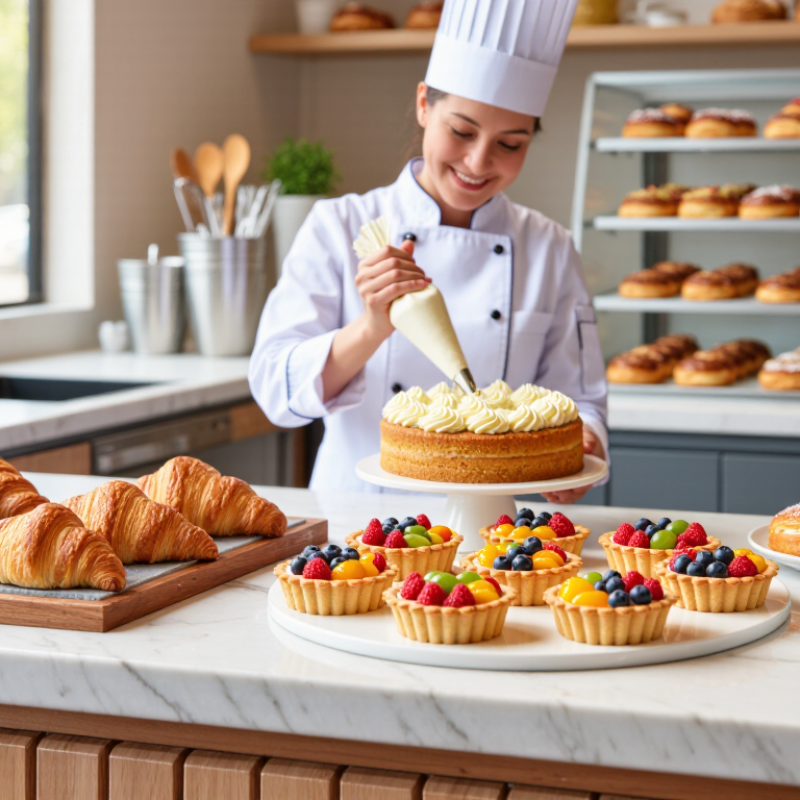
Choosing a Pastry Maker can give a business more than a reliable supply of sweet products. It can bring careful technique, consistent portions, and a distinctive menu to a café, hotel, or restaurant. Picture crisp tart shells beside a morning coffee, or laminated pastries arranged in a bright display case. These details shape what customers notice—and remember. Julia Child is often credited with saying, “A party without cake is just a meeting.” Her familiar line points to the emotional role baked goods can play. In business, that role still needs sound planning.
A skilled pastry partner may help match recipes to your customers, equipment, and service schedule. They can also advise on texture, presentation, seasonal ingredients, and production needs. Those conversations matter. A beautiful pastry that arrives late, softens on display, or exceeds the price customers will pay is not a good fit. That part is easy to overlook. Before choosing a maker, ask for samples, discuss storage and delivery, and clarify how recipes or product changes will be handled. Check references where possible, and compare the full cost—not just the price per item.
The right Pastry Maker can support a memorable brand and a smoother kitchen workflow. But partnership alone cannot fix unclear goals or weak communication. Be candid about what your business can sustain. Then assess the craft, consistency, and practical fit behind every sample.
Define Commercial Pastry Makers and Their Role in Bakery Production
Commercial pastry makers are machines designed to prepare pastry dough and components at a steady production scale. Depending on the setup, they may mix ingredients, roll dough to an even thickness, portion fillings, or shape products. They help bakery teams repeat key steps across trays of croissants, tarts, and puff pastry. Consistency matters. A uniform dough sheet can bake more evenly and reduce avoidable trimming.
Their role is practical, not magical. These machines can increase output and reduce repetitive handwork, but staff still need to check dough temperature, texture, and ingredient measurements. A sheeter, for example, should be adjusted to suit the dough; pressing it too quickly can damage its layers. Small differences in flour or room temperature may also change results. That part is easy to underestimate.
Tips: Match the machine to your menu and daily batch size. Test a small batch before changing settings. Keep a simple record of dough condition, roller gaps, and results. It may feel fussy, but those notes can help a team spot patterns. Allow room for cleaning and safe access around moving parts. A machine saves time only when the workflow around it makes sense.
Measure Market Opportunity: U.S. Foodservice Sales Hit $1.1T in 2024 (NRA)
The National Restaurant Association estimated U.S. foodservice sales at $1.1 trillion in 2024. That scale signals substantial demand, but it does not guarantee easy profits for every bakery or café. Customers may buy pastries with coffee, breakfast, or an afternoon snack, creating several moments to earn a sale. A flaky croissant beside a hot cup can make the offer feel complete. Small details matter.
A pastry maker can help a business turn that opportunity into a dependable menu. They can develop recipes, test texture after baking, and plan batch sizes around busy hours. For example, a café might compare morning sales of muffins, savory turnovers, and laminated pastries before expanding its range. Yet labor, ingredient costs, waste, and local preferences still shape the outcome. The national figure is broad; it cannot predict one shop’s demand. That is worth remembering. Even experienced teams misjudge a flavor or bake too much on a rainy Tuesday. A useful pastry partner reviews sales, adjusts production, and keeps quality consistent without making the menu unnecessarily complex. Ask for practical trials, clear costing, and methods staff can repeat during a rush.
Assess Labor Demand: Baker Employment to Grow 5% from 2022–2032 (U.S. BLS)
The U.S. Bureau of Labor Statistics projects baker employment to grow 5% from 2022 to 2032, about as fast as the average for all occupations. It also projects roughly 18,900 openings annually, on average, over that decade. These figures cover bakers broadly, not pastry makers alone, so they indicate labor demand rather than guaranteed demand for a particular shop’s products.
For a business, a trained pastry maker can help turn that demand into consistent production. Think measured dough, even portions, and trays timed to reach the counter before the morning rush. Skilled staff may also reduce avoidable waste when batches require careful temperature and proofing control. Small details matter. A forecast is useful, but imperfect: local hiring conditions, wages, and customer habits can differ sharply. The BLS outlook supports planning for a steady need for baking skills; it cannot promise that every pastry business will find or retain qualified workers. Use the projection alongside local job postings, sales patterns, and a realistic staffing plan.
Why Choose a Pastry Maker for Your Business?
Assess labor demand: projected employment growth, 2022–2032
The U.S. Bureau of Labor Statistics projects baker employment to grow 5% from 2022 to 2032, compared with 3% for all occupations. These projections offer labor-market context; actual hiring needs vary by business and location.
Compare Equipment Costs with Bakers’ $34,560 Median Pay in 2023 (U.S. BLS)
A pastry maker can expand daily output without asking one baker to repeat every mixing, shaping, and baking task by hand. The labor comparison matters. The U.S. Bureau of Labor Statistics’ May 2023 Occupational Employment and Wage Statistics report lists bakers’ median annual pay at $34,560. That is a useful benchmark, not the full cost of employing someone; benefits, training, scheduling, and payroll expenses can add more.
Consider a hypothetical $10,000 equipment purchase: it equals about 29% of that annual median pay. At $20,000, the purchase equals about 58%. These are simple comparisons, not proof that equipment replaces a worker. A pastry maker still needs recipe development, quality checks, cleaning, and someone to notice when dough feels too warm. Small details matter.
The BLS figure is a national median, not a local hiring quote, and equipment prices vary by capacity, installation, and maintenance. A business should compare the purchase with its own labor hours and expected sales, then include utilities and repair downtime. The math can look neat on a spreadsheet. Real kitchens are less neat. A machine may save repetitive effort, but it cannot guarantee demand or consistent results without skilled oversight.
Evaluate Production Capacity, Sanitation, and Compliance Before Choosing Equipment
Why Choose a Pastry Maker for Your Business?
Evaluate Production Capacity, Sanitation, and Compliance Before Choosing Equipment
A pastry maker should match your busiest shift, not just your average day. Record trays per hour, batch size, and recovery time after loading cold ingredients. Then compare those figures with the machine’s tested output. Brochure capacity can look generous; real kitchens are less tidy. Leave room for a mixer, cooling racks, and staff movement. Small details matter.
Sanitation affects both product quality and daily workload. Look for smooth, accessible surfaces, removable guards, and parts that can be cleaned without awkward tools. The FDA Food Code 2022 uses 41°F (5°C) or below as a cold-holding benchmark and 135°F (57°C) or above for hot holding; check local adoption and requirements for your process. A pastry maker may not perform every holding task, but its controls and cleaning instructions should fit your food-safety plan. A glossy finish alone proves little.
Tips: Ask for a live production test using your recipe, pan size, and peak batch. Time cleaning and changeovers, too. Then test it. Note any hard-to-reach seams, unclear temperature readouts, or steps staff may skip when rushed.