How to Choose the Right Industrial Dynamic Checkweigher at Canton Fair?
Choosing the right Industrial Dynamic Checkweigher at the Canton Fair can be a challenging task. The fair, one of the largest trade events in the world, showcases diverse products. This offers excellent opportunities for manufacturers and suppliers. According to industry reports, the demand for dynamic checkweighers is increasing due to strict quality control standards in manufacturing.
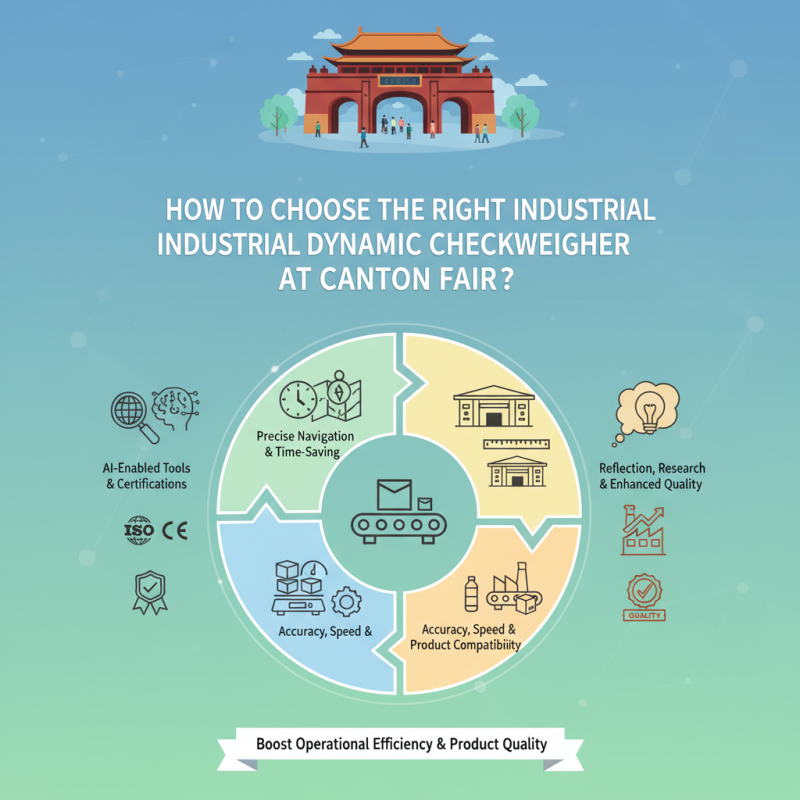
At the fair, buyers can leverage AI-enabled tools to filter suppliers effectively. These tools help identify manufacturers with essential qualifications, like ISO and CE certifications. With precise navigation, attendees can save time while exploring over 155,000 square meters of exhibits. Yet, many buyers still struggle to assess the unique features of different checkweighers.
Moreover, it’s essential to consider factors such as accuracy, speed, and product compatibility. Some products may not meet specific requirements, leading to wasted investments. Ultimately, reflecting on the choices made at the fair is crucial. Comprehensive research and understanding of individual needs will guide purchasing decisions. The right Industrial Dynamic Checkweigher can significantly enhance operational efficiency and product quality.
Understanding the Purpose and Benefits of Dynamic Checkweighers
Dynamic checkweighers serve a crucial role in industrial environments. Their main purpose is to ensure product weight consistency. With increasing production lines, accuracy is vital. A checkweigher helps prevent underfilled or overfilled products. This leads to improved customer satisfaction. Accurate weights ensure compliance with regulations as well.
The benefits of using dynamic checkweighers go beyond simple weight checks. They also enhance productivity. By integrating with existing systems, they can provide real-time data. This data can identify trends and anomalies. However, not all checkweighers are created equally. The wrong choice can lead to wasted resources and further complications. Each application might require a different specification.
It is important to reflect on your specific needs. Consider the products you handle. Are they varying in shape or size? The checkweigher must fit these variables. Additionally, keep in mind the pace of your production line. If it's too slow, the checkweigher may become a bottleneck. An informed choice can streamline operations and reduce waste in the long run.
Key Features to Look for in Industrial Dynamic Checkweighers
When selecting an industrial dynamic checkweigher at the Canton Fair, consider key features that affect accuracy and efficiency. Accuracy is paramount. A precise checkweigher minimizes product waste and ensures compliance with regulations. Look for models with a high-speed weighing mechanism that can handle various package sizes.
Another essential feature is the ease of integration. Checkweighers should fit seamlessly into your existing production line. If installation seems complicated, it may lead to costly downtime. Check user manuals or ask about installation support. Compatibility with existing software can enhance your operational efficiency.
Tips: Always ask for a demonstration. Seeing the checkweigher in action helps assess its performance. Also, consider the after-sales support offered. A product may look promising, but support services can make a difference. Remember, not all features are essential for every business. Identify what fits your needs best before purchasing.
How to Choose the Right Industrial Dynamic Checkweigher at Canton Fair? - Key Features to Look for in Industrial Dynamic Checkweighers
| Feature | Description | Importance |
| Accuracy | Precision in weight measurement | Essential for compliance and quality control |
| Speed | Rate of measurements per minute | High-speed operations improve productivity |
| Build Quality | Material durability and robustness | Ensures long-term reliance and minimal downtime |
| User Interface | Ease of use and navigation of the system | Improves operational efficiency and reduces training time |
| Integration Capability | Ability to connect with other systems | Facilitates seamless production workflows |
| Size and Portability | Footprint and weight of the checkweigher | Important for space-constrained environments |
| Compliance Standards | Adherence to industry regulations | Vital for legal and safety considerations |
Evaluating Accuracy and Speed Requirements for Your Applications
When attending the Canton Fair, selecting the right industrial dynamic checkweigher is crucial. Start by evaluating the accuracy required for your products. Consider the weight range and target variance. For some, a precision of ±0.5 grams may be essential. Others might function well with a tolerance of ±2 grams. If your production deals with bulk goods, higher tolerance may suffice. Always think about the implications of inaccuracies on your operations.
Next, speed requirements are equally critical. Assess your throughput needs. A checkweigher operating at 200 products per minute may seem adequate for small batches. However, larger operations might require 400 products or more. Imagine the difference during peak production times. A slow checkweigher can create bottlenecks. This can lead to financial losses.
However, it’s important to reflect on your actual workflow. Ideal speed and accuracy do not always match reality. Sometimes, operators underestimate the learning curve involved in adjusting new machines. Misalignments and miscalculations can affect overall performance. Understanding your specific context can make or break your choice. Keep these factors in mind as you navigate the fair.
Comparing Different Brands and Models at the Canton Fair
When attending the Canton Fair, you’ll encounter many options for industrial dynamic checkweighers. Not all checkweighers function the same way. Analyzing various brands and models is crucial before making a decision. According to industry reports, nearly 30% of businesses face challenges with accuracy. This data emphasizes the importance of choosing the right machine.
Tips: Always review specifications closely. Check the machine's speed and accuracy ratings. Some models boast speeds exceeding 200 containers per minute. Meanwhile, accuracy levels can vary from 0.1 grams to 1 kilogram. Understanding your specific requirements is key. Don’t settle for average.
While comparing models, pay attention to user feedback. Real users often highlight strengths and weaknesses not listed in marketing materials. Features like touchscreen interfaces and advanced calibration can make a big difference. However, beware of over-complicating your choice. Sometimes, simpler models perform just as well—if not better. Striking a balance is essential.
Making Informed Purchasing Decisions: Pricing and Support Considerations
Choosing the right industrial dynamic checkweigher at trade events like the Canton Fair can be overwhelming. Pricing and support are crucial factors in making a decision. Industry reports indicate that a significant 70% of purchasing decisions are driven by cost-effectiveness. It’s essential to navigate the balance between initial pricing and long-term operational costs. Sometimes, the cheapest option can lead to higher maintenance costs.
Support is another vital consideration. Look for suppliers offering comprehensive after-sales services. According to a recent study, 65% of manufacturers reported that technical support influenced their satisfaction with equipment. Purchasing without understanding support options can lead to regret. Some companies may seem affordable, but poor service can be costly down the road.
Beware of overselling. Not every feature is necessary for all operations. Overly complex machines may complicate usage and maintenance. Sometimes, simpler is better. Evaluate your specific needs carefully. Take your time during comparisons. Feel free to ask lots of questions. Don’t rush the decision. It’s a commitment that should enhance efficiency and performance.