Why Use Solenoid Valves in Your Irrigation System?
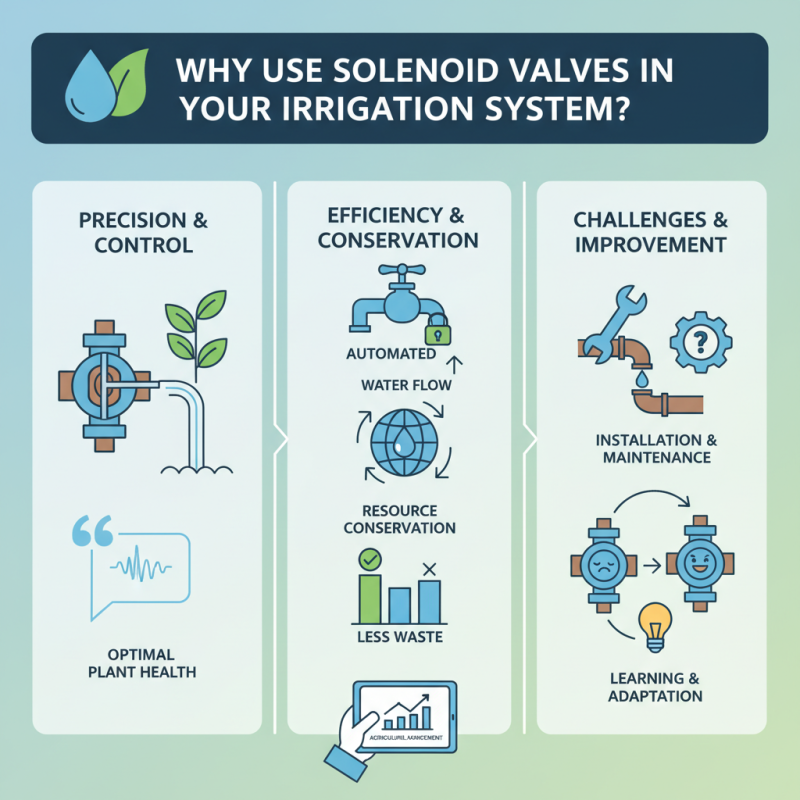
In the world of agriculture, water management is crucial. Solenoid valves play a key role in irrigation systems. According to John Carter, an irrigation specialist, “Solenoid valves offer precision and control in watering, crucial for optimal plant health.” Understanding this technology can enhance efficiency and conserve resources.
The importance of a Solenoid Valve In Irrigation System cannot be overstated. These valves automate the flow of water, allowing for seamless operation. Efficiency means not wasting water, a vital resource in many regions. Yet, it's challenging to find the right devices among countless options available today.
However, implementing solenoid valves is not without its challenges. Proper installation and maintenance are necessary to avoid malfunctions. A poorly maintained solenoid can lead to leaks and waste. It’s essential to learn from experiences and mistakes to improve irrigation processes. Embracing these technologies can make a significant difference in agricultural practices.
Understanding Solenoid Valves and Their Functionality
Solenoid valves play a crucial role in modern irrigation systems. They act as the automated control points for water flow. When electrical current runs through the solenoid, it creates a magnetic field. This field moves a plunger, opening or closing the valve. Such precision is vital for conserving water and ensuring plants receive adequate hydration.
These valves are typically made from durable materials, which can withstand harsh outdoor conditions. However, they can malfunction if debris accumulates in the system. Regular cleaning is necessary but often overlooked. Many users report their systems failing due to simple blockages. This emphasizes the need for consistent maintenance.
Moreover, solenoid valves provide flexibility in irrigation schedules. They can be programmed to open and close at specific times. This feature enables tailored watering, aligning with plant needs. However, improper programming can lead to either overwatering or underwatering. Finding the right balance can take time and effort. It's a learning process for many gardeners.
Advantages of Integrating Solenoid Valves in Irrigation Systems
Integrating solenoid valves into irrigation systems offers various advantages. These devices are crucial for automating water flow. They enable precise control over irrigation schedules. With a solenoid valve, users can optimize water usage based on specific needs. A study from the Irrigation Association estimates that smart irrigation systems can reduce water usage by 20% to 50%. This is significant for both cost savings and environmental conservation.
Moreover, solenoid valves can enhance system efficiency. They respond quickly to electrical signals, allowing for rapid adjustments in water delivery. Properly installed, they minimize leaks and runoff. Research by the American Society of Agricultural and Biological Engineers found that efficient irrigation can improve crop yields by 15% to 30%. However, users should consider maintenance aspects. Solenoid valves may require periodic checks to ensure proper functioning. Even small issues can lead to system inefficiencies, which could negate some benefits. Regular inspections can help avoid unexpected failures, ensuring a smoother operation.
How Solenoid Valves Enhance Water Management Efficiency
Solenoid valves play a crucial role in enhancing water management efficiency in irrigation systems. According to a report by the Irrigation Association, automated irrigation can save up to 30% more water than traditional methods. Solenoid valves enable precise control over water flow, reducing waste significantly. They can be programmed to open and close based on the needs of specific crops. This targeted approach minimizes overwatering and helps maintain soil health.
Many farmers still rely on manual systems, which can lead to inefficiencies. A study revealed that 40% of agricultural water is wasted through inefficient irrigation methods. Solenoid valves help address this issue by allowing for real-time adjustments based on weather conditions and soil moisture levels. By implementing these valves, growers can achieve better crop yields while conserving water resources.
While system installation can be a challenge, the long-term benefits are substantial. Some farmers have noted their initial hesitation in adopting such technology, fearing high upfront costs. However, as awareness of the resulting water savings grows, many are reevaluating their choices. Investing in solenoid valves may initially seem daunting, but efficient water management could transform agricultural practices for the better.
Factors to Consider When Choosing Solenoid Valves for Irrigation
When selecting solenoid valves for your irrigation system, several factors demand attention. The valve’s compatibility with your existing system is crucial. Ensure it fits the size and type of pipes you use. A mismatched valve can lead to leaks and inefficient operation. Consider the pressure requirements as well. An incompatible valve might not withstand the necessary pressure, affecting performance.
Another essential factor is the material of the solenoid valve. It should resist corrosion and harsh weather conditions. Material choice impacts the longevity of the valve. Plastic valves are lighter but may not be as durable in extreme conditions. Metal valves offer durability, yet they are heavier and can be pricier. Choose based on your specific environmental conditions.
Power consumption also plays a pivotal role in valve selection. While low energy consumption is desirable, sometimes a valve may require more power for optimal function. Finding a balance is necessary. Lastly, think about the maintenance aspect of the solenoid valves. Regular upkeep ensures long-lasting performance and avoids unexpected failures. It’s essential to reflect on these aspects to select the right solenoid valve for reliable irrigation.
Maintenance Tips for Ensuring Optimal Performance of Solenoid Valves
Solenoid valves play a crucial role in irrigation systems. They automate the opening and closing of water flow, enhancing efficiency. However, maintaining these valves is key to ensuring optimal performance. According to recent industry reports, 30% of irrigation failures can be traced back to valve issues. Regular maintenance can significantly reduce this risk.
Here are some maintenance tips to consider. Check for leaks regularly. Even a small drip can waste water and lead to larger problems. Inspect electrical connections frequently. Loose wires can hinder functionality. Remember, if a valve isn’t operating properly, it affects the entire irrigation system.
Clean the valves periodically. Soil and debris can build up, causing blockages. Make this part of your routine. Don't forget to test valve functions seasonally. An unexpected failure during peak usage can be frustrating. Often, we overlook these checks until it's too late. Regular care can extend the life of your solenoid valves and improve efficiency significantly.
Why Use Solenoid Valves in Your Irrigation System?
This chart illustrates the performance metrics of solenoid valves used in irrigation systems over various conditions. The data reflects common usage scenarios and their respective efficiency ratings.