What Are the Top Types of Grey Retail Shelving?
Grey Retail Shelving can give a store a calm, consistent backdrop while products do the talking. But “grey shelving” is not one fixture type. It includes freestanding gondola units, wall-mounted shelves, slatwall systems, and open-wire displays. Each serves a different purpose. A grocery aisle may need sturdy gondolas, while a boutique might use slim wall shelves to keep the floor open.
Small details matter. Finish, depth, load capacity, and shelf spacing affect both appearance and daily use. A warm grey can soften a bright room; a darker charcoal may frame pale packaging sharply. Under harsh lights, though, some grey finishes look colder than expected. Samples help. So does seeing a fully stocked bay, not just an empty fixture.
Retail anthropologist Paco Underhill is known for the observation, “People are not rational.” That insight is relevant to shelving: shoppers respond to what feels clear and easy to browse, not only to a fixture’s specifications. The best choice depends on the merchandise, traffic, and how often displays change. There is no universal winner. A flexible system may be practical, yet it can look plain if every bay is arranged alike. The sections ahead compare leading types of Grey Retail Shelving, with their strengths, trade-offs, and suitable store uses.
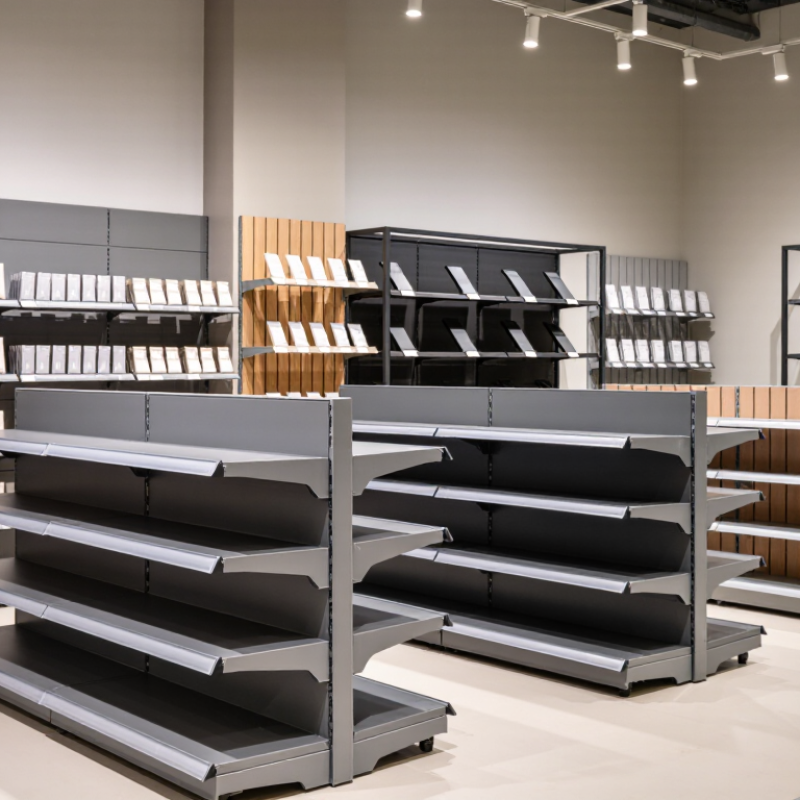
Grey Gondola Shelving for Flexible Store Layouts
Grey gondola shelving suits stores that need adaptable floor plans without a strong visual statement. Its neutral finish lets colorful packaging stand out, while adjustable shelves and hooks support different product sizes. A retailer can widen a bay for bulky goods or add shelf levels for smaller items. U.S. Census Bureau data put e-commerce at 15.4% of total U.S. retail sales in 2023. That figure is context, not proof that any fixture improves sales. But physical stores still handle most retail sales, making clear aisles and easy-to-update displays practical priorities.
Grey can also make adjoining bays feel consistent when departments change. Use end units to highlight seasonal products, and keep sightlines open at aisle intersections. Check shelf depth against actual stock: deep shelves may hide products at the back. One drawback is that grey can look flat under dim lighting. It is not magic. Test a sample under the store’s real lights before ordering a full run.
Tips: Start with a simple bay plan, then mark power outlets, walkways, and restocking space. Keep frequently handled items within easy reach. Photograph the layout before and after changes; compare customer flow, not just appearance. A small trial can reveal awkward gaps before the whole floor is rearranged.
Grey Wall Shelving for Perimeter Displays
Grey wall shelving works best when it makes perimeter products easy to scan. A matte mid-grey finish can help colorful packaging and price labels stand out without making the wall feel busy. Keep heavier stock on lower shelves, and place frequently handled items within easy reach. Leave some breathing room. A crooked shelf or crowded edge is surprisingly noticeable.
POPAI’s 2012 Shopper Engagement Study reported that 76% of purchase decisions were made in-store. The study does not measure shelving performance, but it underlines why clear product presentation matters. Use adjustable shelves to fit different package heights, then check sightlines from the aisle. A shopper should see key labels without leaning around a display.
Lighting changes the result. Grey can look clean under neutral light, yet feel cold beneath blue-white fixtures. Test a small section at different times of day before setting the full perimeter. Check for glare on glossy packaging, too. This takes extra effort. And grey is not automatically calming; too much of it can make a wall feel flat.
Grey Endcap Shelving for Promotional Products
Grey Endcap Shelving for Promotional Products
Grey endcap shelving gives promotional products a clear position at aisle intersections, where shoppers can notice them during routine trips. The neutral finish helps colorful packaging stand out without competing for attention. Use adjustable shelves to group items by size, price, or campaign, and keep the most relevant offer near eye level. Small details matter: a clean shelf edge, readable price labels, and enough room to reach products comfortably.
POPAI’s 2012 Shopper Engagement Study reported that 76% of purchase decisions were made in-store. That finding supports giving promotions visible, accessible placement, though it does not guarantee a sale. Keep the display focused: too many products can make the offer harder to understand. Refill regularly, check that signage matches the promotion, and watch which items move. Grey shelving can make a display feel orderly. Still, it is not magic. A poorly stocked endcap or unclear message can waste valuable space.
What Are the Top Types of Grey Retail Shelving?
Common nominal shelf depths for grey retail shelving and promotional endcap displays
These are common nominal shelf-depth options, not fixed specifications for every fixture. Shallower shelves can suit smaller packaged goods, while deeper shelves may accommodate larger promotional products. Check product dimensions and aisle clearance before choosing an endcap or other shelving format.
Grey Specialty Shelving for Specific Retail Needs
Grey Specialty Shelving for Specific Retail Needs
Grey shelving can do more than create a coordinated look. Specialty units help retailers match storage to the products on display. Slatwall panels suit small accessories because hooks and trays can be repositioned as stock changes. For shoes, angled shelves make pairs easier to see, while low front lips help keep them in place. A soft grey finish can also reduce visual clutter around colorful merchandise.
For heavier boxed goods, sturdy metal shelves with adjustable levels offer practical flexibility. Glass or acrylic shelves can give smaller, lightweight items a more open display, though they need regular cleaning to stay presentable. Grey end-cap units can draw attention to seasonal products without introducing a loud new color. The best choice depends on product weight, customer reach, and how often displays change. It is easy to focus on appearance and overlook restocking access; that can become a daily annoyance.
Tips: Check shelf depth against the actual package size, not just the product. Leave room for hands to reach items comfortably. Measure twice. If one section feels cramped during a trial setup, adjust it before filling the whole run.