10 Best Air Solenoid Valves for Global Buyers
Choosing an air solenoid valve involves more than comparing price or brand names. Global buyers must match each valve to the system’s pressure range, flow needs, port size, and operating voltage. A compact valve may suit a packaging machine, while a larger assembly may better serve a production line with frequent cycling. The wrong connection or coil voltage can delay installation. Small details matter.
This guide introduces ten options for buyers comparing designs, manufacturers, and supply needs across markets. It highlights practical factors such as body material, sealing method, response requirements, and available technical documentation. Buyers should confirm that published specifications match their actual air quality, temperature, and duty cycle. They should also check local availability, replacement-part support, and applicable product requirements before ordering. These checks are not glamorous. They can prevent avoidable downtime.
No single model is best for every application. A valve with a broad pressure range may still be unsuitable if its flow capacity or interface does not fit the equipment. Supplier claims deserve careful review, too; specifications and certifications should be verified against current product documents. This comparison is a starting point, not a substitute for engineering assessment or hands-on testing. Some choices remain imperfect. That is worth acknowledging. A thoughtful shortlist helps buyers ask better questions and select an air solenoid valve that fits the job, the site, and the realities of long-term maintenance.
Begin with Air Valve Basics: 2/2-, 3/2-, and 5/2-Way Configurations
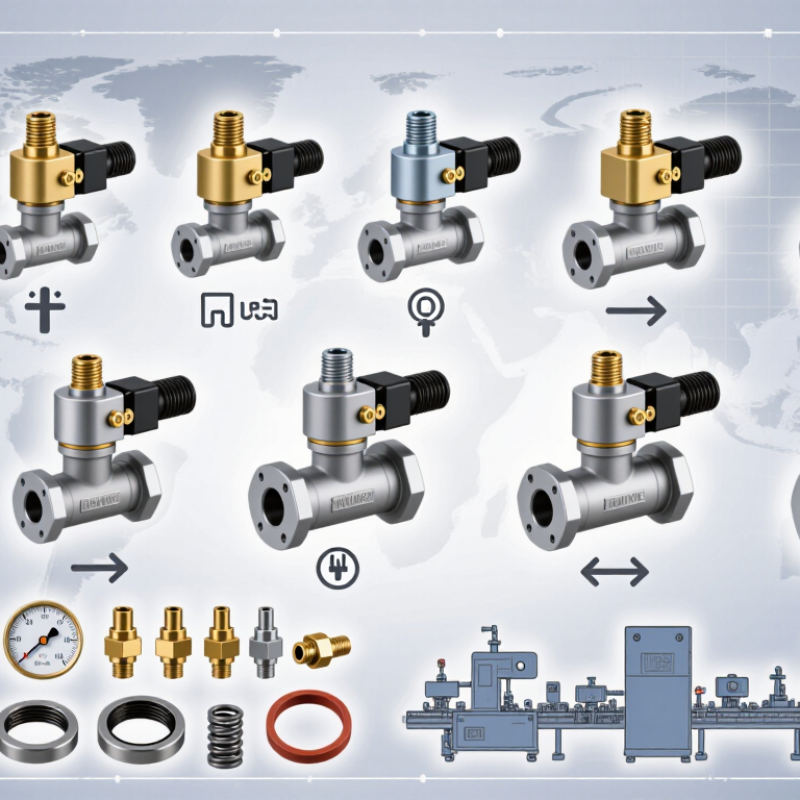
Air solenoid valves look simple, but their port arrangement determines how a machine moves. A 2/2-way valve has two ports and two positions: it opens or blocks one air path. It suits basic on/off tasks, such as feeding air to a nozzle or isolating a small line. Normally closed valves stay shut without power; normally open valves stay open. Check the default state against the machine’s safe condition, not just the wiring diagram. Small detail. Big consequence.
A 3/2-way valve has three ports and two positions, commonly pressure, outlet, and exhaust. It can drive a single-acting cylinder, then vent it so its spring returns the rod. A 5/2-way valve uses five ports and two positions to alternate supply and exhaust on a double-acting cylinder. This is common in pick-and-place fixtures, where both extension and retraction need air control. Port labels help, but markings can be hard to see after tubing is installed. Confirm flow direction, operating pressure, response time, and coil voltage in the datasheet before ordering. Selecting by thread size alone often causes avoidable delays. Test it first.
Compare 10 Top Valves by Flow Rate, Pressure Range, Voltage, and Response Time
A useful comparison of ten air solenoid valves starts with the job, not the catalog ranking. Record each valve’s flow rate, operating-pressure range, voltage, and response time in one consistent table. Flow figures are only comparable when test conditions match. ISO 6358-1:2013 provides a method for characterizing pneumatic component flow using sonic conductance and critical pressure ratio. Check whether published values follow comparable test methods before treating small differences as meaningful. Details matter.
Pressure and voltage need equal attention. A valve rated for the required pressure may still perform poorly if the supply voltage fluctuates or the coil heats during frequent cycling. The U.S. Department of Energy’s Improving Compressed Air System Performance sourcebook notes that compressed-air systems can account for about 10% of industrial electricity use. That makes correct sizing and leak control relevant to operating costs, not just response speed. A faster valve is not automatically the better choice.
For a fair shortlist, note the pressure at which flow was measured, the voltage and frequency, and whether response time means opening, closing, or both. Compare the valve’s port size with the tubing and actuator; a narrow connection can restrict flow downstream. A tidy ranking can mislead. Catalog figures may not reflect a warm coil, long tubing, or real plant pressure. Leave room for a bench test using the actual air supply and switching cycle.
Verify Air Purity and Mounting Interfaces Against ISO 8573-1 and ISO 5599-1
When comparing air solenoid valves, treat air quality as an operating requirement, not a catalog footnote. ISO 8573-1 classifies compressed-air purity by particles, water, and total oil. Specify the required class at the valve’s point of use, and check that filtration and drying can maintain it there. A clean compressor-room reading may not reflect conditions beside a machine. Long pipe runs, drains, and aging filters can change the air before it reaches the valve. Small gaps matter.
Ask for test data or documented limits that match your actual operating conditions. Also check whether lubricated air is permitted; adding oil can affect seals and downstream equipment. Do not guess. ISO 5599-1 defines mounting interfaces for certain pneumatic directional control valves, including relevant dimensions and connections. It does not mean every air solenoid valve uses the same interface. Confirm the valve’s size, port arrangement, and mounting pattern against the manifold drawing before ordering. A catalog image can look convincing while hiding a mismatch. I have seen interface details overlooked during procurement, and they are easy to miss when several valve configurations share similar names. Keep the air-purity class and interface drawing with the purchase specification, then verify both against the delivered unit. These checks reduce avoidable substitutions, though they cannot replace a review of pressure, flow, and duty-cycle requirements.
Assess Duty Cycle, IP Protection, Certifications, and Global Service Support
For global buyers comparing air solenoid valves, the strongest choice is not always the fastest or cheapest. Match the duty cycle to the real operating pattern: intermittent switching differs from continuous energization. A valve running all shift may need a coil rated for continuous duty. Check heat at the actual voltage and ambient temperature. Leave margin. Bench conditions rarely match a warm cabinet beside a compressor.
Check IP protection against the installation, not just the catalog headline. Dust, washdown, cable entry, and connector orientation all affect exposure. An IP rating does not guarantee chemical compatibility or safe immersion. Verify the exact assembly and test conditions. Certifications can vary by market and configuration, so request current documents and confirm that model numbers, coil options, and pressure ranges match the quoted unit. Global service matters after selection: ask about spare-coil availability, response hours, local technical support, and written lead times. A low price loses appeal when a small replacement part takes weeks.
Tips: Request a duty-cycle curve, IP test details, and regional service terms. Keep a photo of the installation. It may reveal a cable-entry issue early.
Match Valve Types to Applications, Operating Conditions, and Regional Supply Needs
Air solenoid valves are not interchangeable just because their ports look similar. A two-way valve can start or stop airflow, while three-way and five-way designs suit different actuator and circuit arrangements. Direct-acting models can operate without a minimum pressure differential, which helps in low-pressure systems. Pilot-operated models often handle higher flow, but they depend on adequate supply pressure. Check the valve symbol and flow rating against the circuit drawing, not just the port size.
Operating conditions matter just as much. Compare the pressure range, air temperature, duty cycle, coil voltage, and connector type with the actual installation. A valve near a compressor may face heat, vibration, and moisture; clean, dry air helps protect internal parts. Seal material should suit the air and surrounding environment. For a fast-moving cylinder, confirm response time and flow capacity under working pressure. A bench test at unloaded conditions can be misleading. It happens.
Regional supply needs can change the practical choice. Confirm local voltage and frequency options, replacement-coil availability, port-thread compatibility, and realistic delivery times before ordering. Keep the electrical connection and manual override accessible for maintenance. Ask suppliers for datasheets and test documentation, then verify that stated ratings match the intended operating range. I would still leave room for uncertainty: field conditions rarely match a perfect catalog example, so pilot a small quantity when the application is unfamiliar.
Air Solenoid Valve Operating Pressure Ranges
Compare representative pressure ranges for common pneumatic valve configurations when matching valve types to applications and operating conditions.
Ranges are indicative examples, not universal specifications. Actual limits depend on the valve design, seals, pilot requirements, and air conditions; confirm the product datasheet before selection.